the over-provisioning trap
In modern web development, teams routinely throw cloud infrastructure at performance problems.
A digital publication or content platform experiences traffic spikes during a press mention or viral article. To prevent downtime, DevOps engineers stand up redundant Kubernetes pods behind an Application Load Balancer, provision multi-AZ RDS database replicas, configure Redis caching clusters, and set up CloudWatch alarms with auto-scaling triggers.
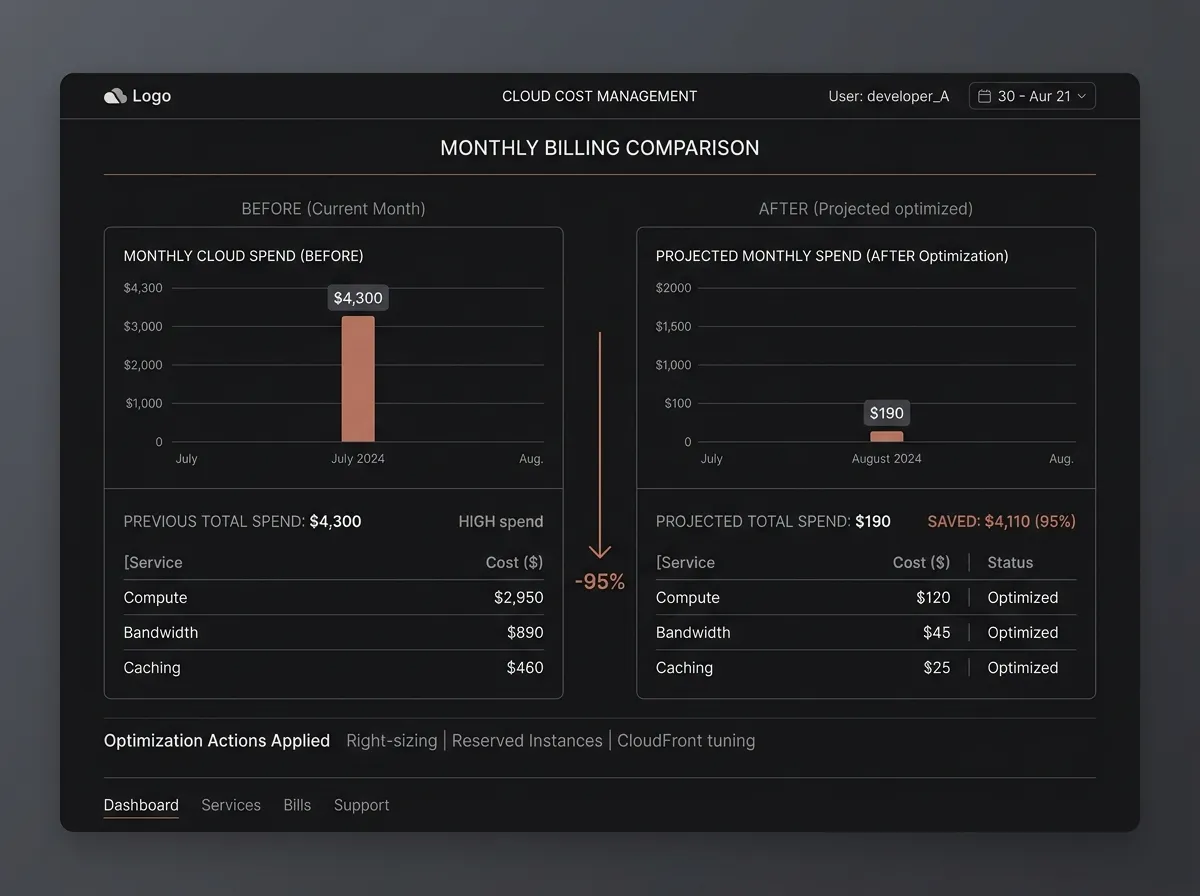
At the end of the month, the AWS bill arrives:
- Compute (EC2 / ECS containers): €2,950
- Data transfer & egress bandwidth: €890
- Load balancers & NAT gateways: €460
- Total monthly run-rate: ~€4,300
Yet 95% of the requests hitting that cluster are asking for the exact same article published three days ago. The team is paying enterprise compute rates to repeatedly render static text and images from a database.
the edge inversion
Cobalt inverts the delivery model by moving the source of truth to the edge.
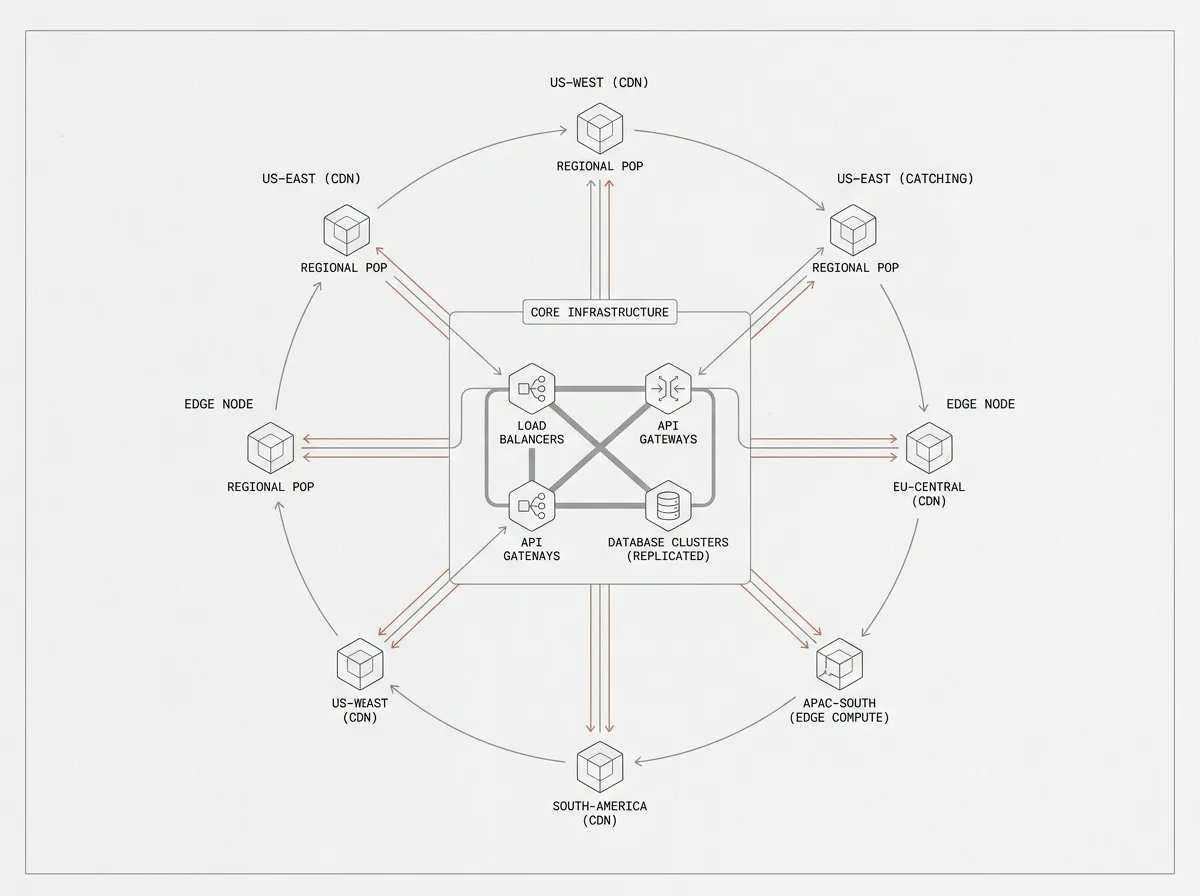
Instead of keeping an expensive cluster running 24/7 waiting for traffic spikes, content is pre-compiled at build time into pure static HTML, CSS, and optimized WebP/AVIF media. The resulting assets are deployed across Cloudflare’s global edge network of 330+ points of presence.
Origin compute is completely eliminated from the critical request path:
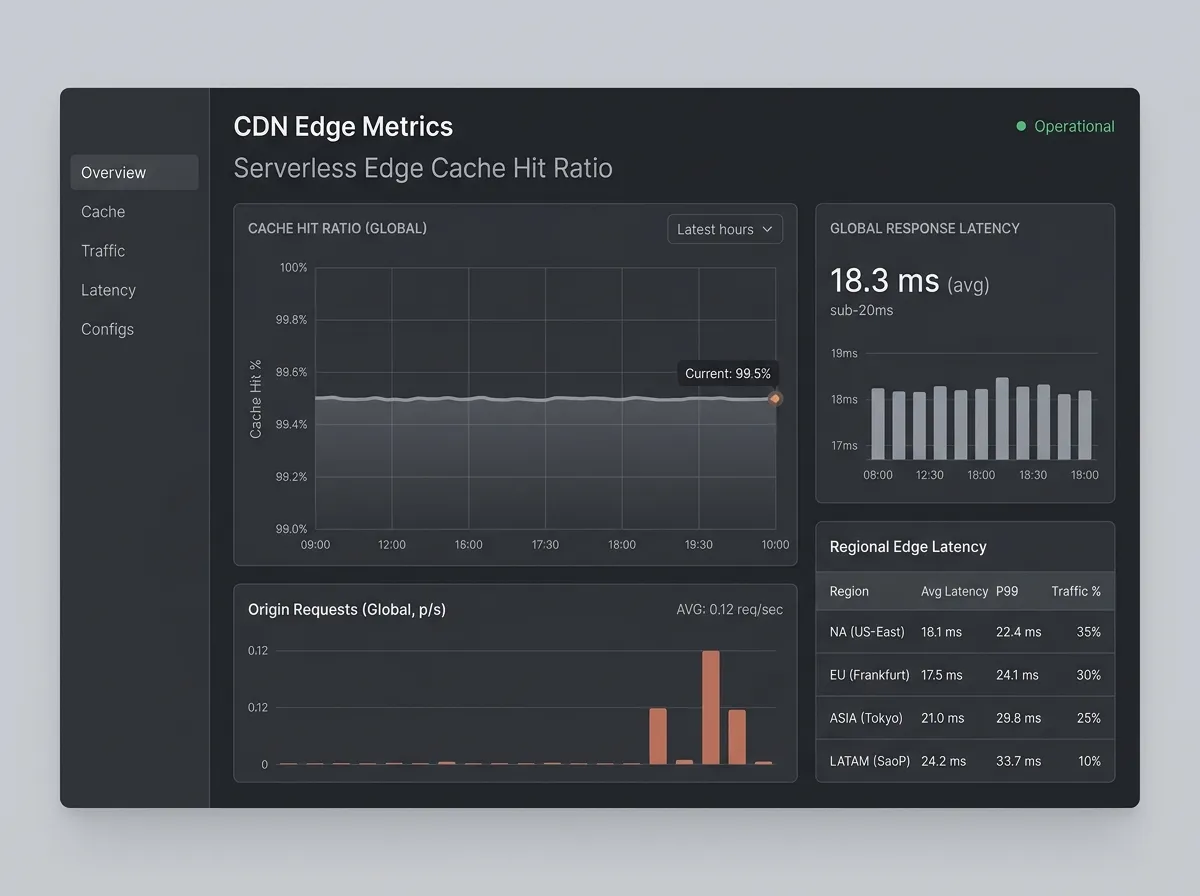
- Cache hit ratio: 99.5% of all visitor requests are resolved at the edge node nearest to the user, with average global response latency under 18ms.
- Instant invalidation: When an editor publishes an update or corrections in Storyblok, a webhook purges the specific surrogate cache tag on Cloudflare in under 15 milliseconds. Only the changed URL re-caches; the rest of the site remains untouched.
- Compile-time media: High-resolution photography is processed at build time via Astro’s image pipeline, eliminating on-demand Lambda image transformation fees.
spike immunity without auto-scaling
On traditional cloud setups, traffic surges trigger auto-scaling policies that spin up additional containers—increasing costs precisely when the site is most successful. If the scaling policy is too aggressive, the bill spikes; if it is too conservative, visitors see 504 Gateway Timeouts.
Because Cobalt serves pre-rendered static files directly from edge cache, a 100x traffic spike generates zero additional compute demand. Edge nodes absorb the request volume effortlessly without touching a database, keeping latency flat at sub-20ms while hosting costs remain unchanged.
Cost reduction is usually sold as a trade-off: smaller instances, aggressive throttling, or reduced service quality.
Edge-native static architecture improves performance and cost together:
- Performance: Mobile Largest Contentful Paint drops from 3.4 seconds to 0.65 seconds, and global Time to First Byte (TTFB) drops from 480ms to 18ms.
- Cost: Monthly infrastructure spend collapses from €4,300 to under €190—saving over €49,000 annually in recurring cloud overhead.
the benchmark numbers
| Cost & Performance Line Item |
Legacy AWS Cluster (ECS + ALB + RDS) |
Cobalt (Astro + Cloudflare Edge) |
Delta |
| Monthly compute |
€2,950 / mo (always-on containers) |
€120 / mo (Workers paid tier) |
-95.9% |
| Bandwidth & egress |
€890 / mo (AWS outbound transfer) |
€45 / mo (Cloudflare edge peering) |
-94.9% |
| Networking & balancers |
€460 / mo (ALB + NAT gateways) |
€25 / mo (Edge DNS & routing) |
-94.6% |
| Total monthly cloud spend |
€4,300 / mo |
€190 / mo |
-95.6% (€4,110/mo saved) |
| Global Time to First Byte (TTFB) |
~480ms (origin round-trip) |
18.3ms (edge cache) |
-96.2% |
| Mobile LCP (throttled 4G) |
3.42s |
0.65s |
-81.0% |
| Edge cache hit ratio |
58.4% (CloudFront TTL) |
99.5% (tag-based edge cache) |
Origin compute eliminated |
| Scaling under 100x traffic spike |
Autoscaling containers (€€€) |
Flat edge cache (zero cost delta) |
Spike-immune |